After a week in Paris, Ian, Bertie, and I headed west into Bretagne (Brittany) to the places I had visited when I was 20 and studying in France. We took a detour to the D-Day beaches in Normandy (and reconnected with David) before heading into deep France.
We stayed in the delightful Norman town of Bayeux, home of the Bayeux Tapestry, is a lovely point from which to visit the D-Day beaches. The Bayeux cathedral is one of the prettiest, lightest, and most appealing cathedrals I've visited.
The streets of old Bayeux
Bertie and I kicked around in the light rain while Ian visited the Bayeux Tapestry. The Tapestry is around 800 years old (first mentioned in 1476) and depicts in embroidery the Norman conquest of England in 1067. It is 250 feet long (70m) by 20 inches tall (50cm), and it's cooler than it sounds.
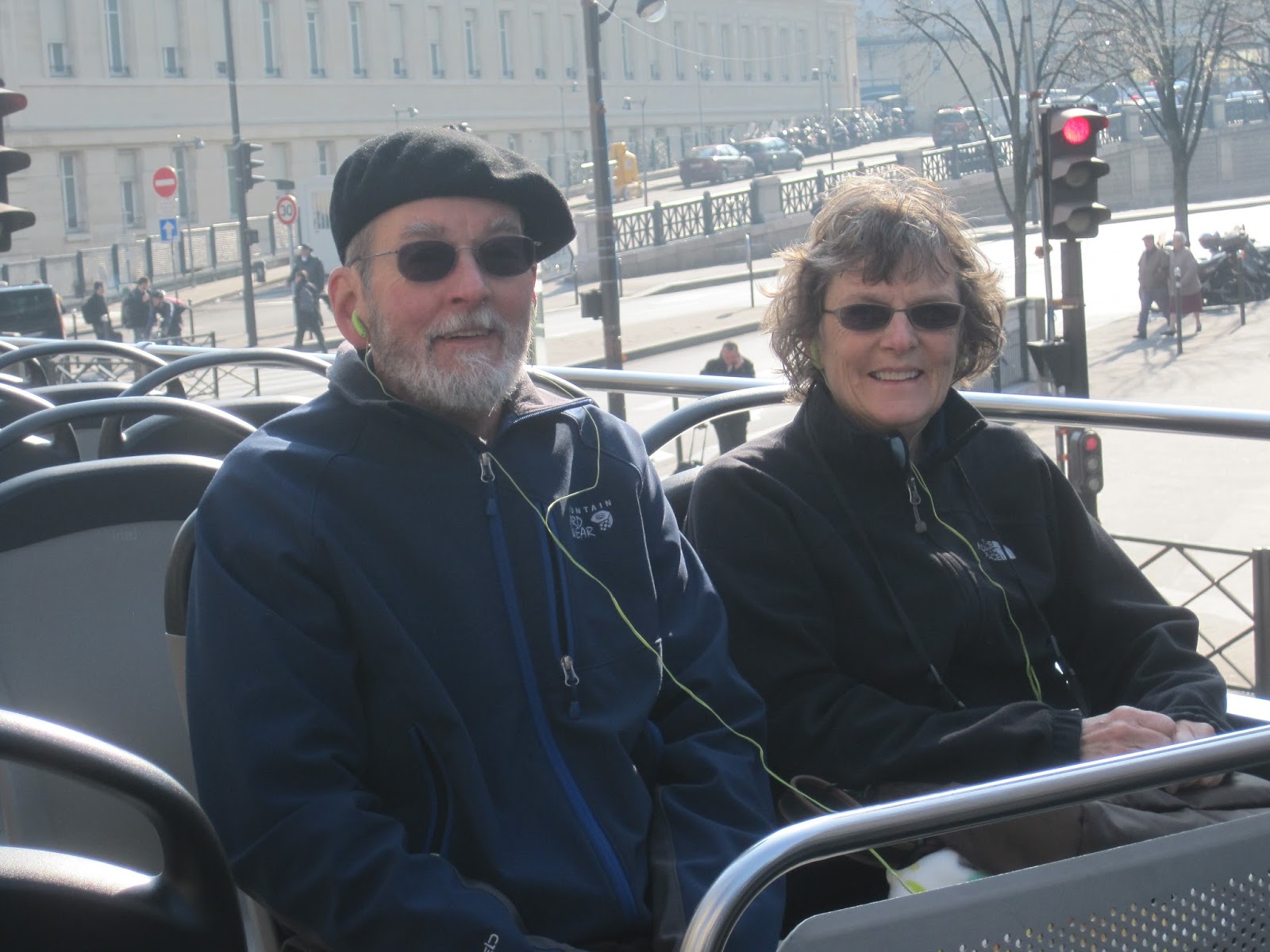
A doubtful selfie: we were getting past the point of tired, and Bertie didn't care as much about the cathedral as I do.
-----------------
The D-Day Beaches
We drove west along the coast to Ste Mere Eglise, one of the towns that witnessed the D-Day landing. An Allied parachutist got stuck on the church steeple and remained there until he was cut down (The Longest Day). It was horribly cold and windy, so we did not have much opportunity to move slowly through this historic place.
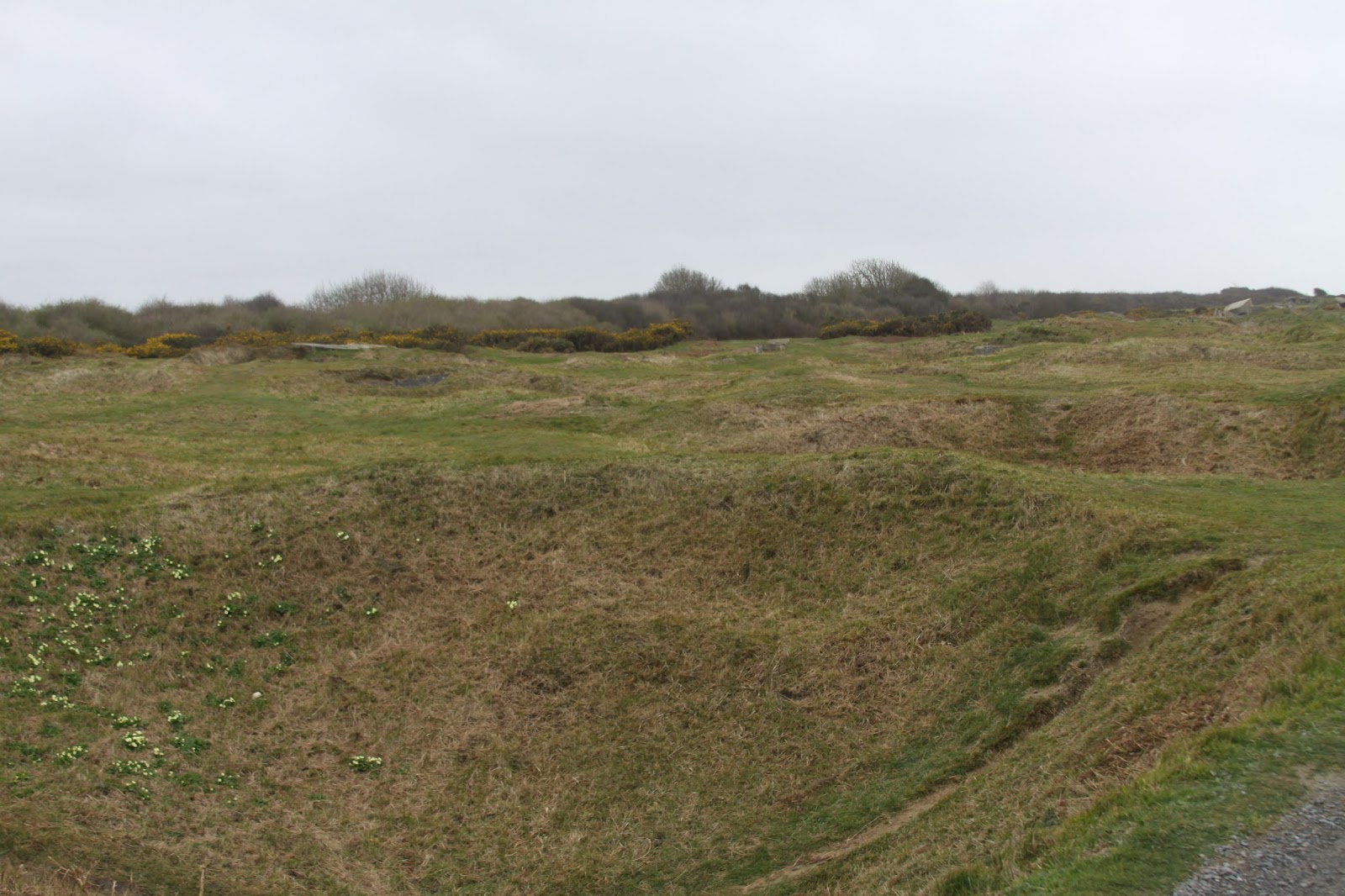
La Pointe du Hoc, site of a major battle. The before pictures show that it was previously smooth agricultural ground.
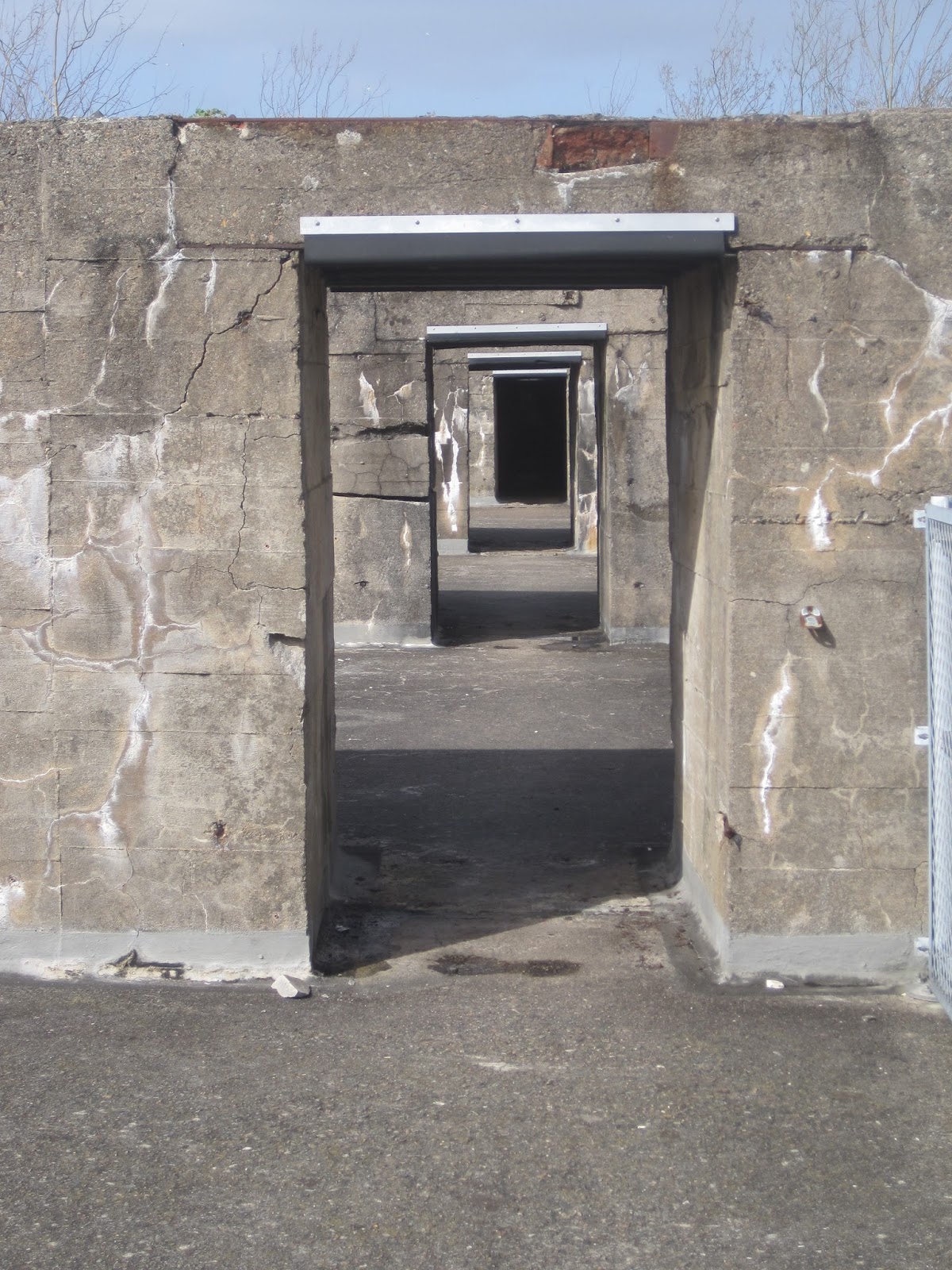
More than 70 years after the bombardments ended, the Pointe du Hoc remains pockmarked with craters. It also has extensive tunnels and defensive works and is very fun on a nice day.
David was here!
Looking out through one of the fortifications.
The sole remaining guns (I think) are at Longues-sur-Mer.
These next photos demonstrate two things: first, it really was a miserable day. Second, bicycle maniacs are in a class by themselves. This was some kind of promotion activity for the Tour de France - as if it needed promoting in Normandy! - and these poor dudes were not having any fun.
It took about 30 minutes for them to get all the way past us.
------------
Batz-sur-Mer
From Bayeux we headed south to La Baule, an area on the Guerande Peninsula, for a visit with my French host family. Jean-Claude and Marie-Therese hosted me for a semester in 1996, and it was lovely to see them again and to introduce Bertie and Ian! They have an apartment in Batz-sur-Mer, and we spent three days with them exploring the village and its environs.
Batz-sur-Mer is on the very eastern/ southern edge of la Bretagne, so its appearance is less typically Breton than some of the other villages. Still, it has strong traces of lovely Breton traditions!
Marie-Therese is shorter than Ian....
Bertie loved his French Mami!
Looking back towards Batz-sur-Mer from across the salt marshes. A lot of fleur de sel is produced here, and most of the saltmakers use traditional methods.
Western France is notorious for treacherous tides: they go out very fast and very far, and they come back in with a vengeance. This is a full bay at high tide. Lots of non-locals come to grief!
A lovely lighthouse.
-------------
Saint-Nazaire
We took a day trip to Saint-Nazaire to see the shipyard. The two massive nuclear warships that Russia had contracted (but were eventually sold to Egypt after Russia's bellicose actions in the Ukraine) were in the harbor still. Saint-Nazaire was a very important Nazi holding during WWII, and traces of their presence remain. This is a photo of a massive ship being assembled.
If I were clever, I would invent a caption for this warning.
Here's Ian providing scale for the Sebastapol.
And again. They are massive ships.
Right in the center of town is the u-boat facility, built and fortified by Nazi occupiers. France attempted to remove it several times but failed. Now the town is growing up around it and incorporating it as possible. It's a very cool space. Ian and Bertie are once again providing scale.
A submarine bay with Ian and Jean-Claude.
And the view through the mouth of the bay.
The roof of the building is also very cool, and my guess is that the vegetation helps with the eventual destruction of the fortifications....
I have no idea what these spaces were for originally (or if they were open to the elements as they are now), but they are fascinating.
Bertie liked running around on the roof, and since it's a fortified Nazi occupation installation, nobody minded what a 13-month-old might do!
The view from the top was, predictably, amazing. That is the Sebastapol again.
Fishing boats.
The French do bridges well!
And there's a sea monster skeleton a short walk from the bridge!
--------------------
The Thatched Village
We visited a restored, working thatched village in the marshes one day. The village was falling apart and going to waste until the commune basically offered the space to people who could make it livable. Now it has residents who try to live sustainably and who welcome visitors to see an older way of life.
Bertie was considerably more interested in something else, but it's a nice picture of the rest of them!
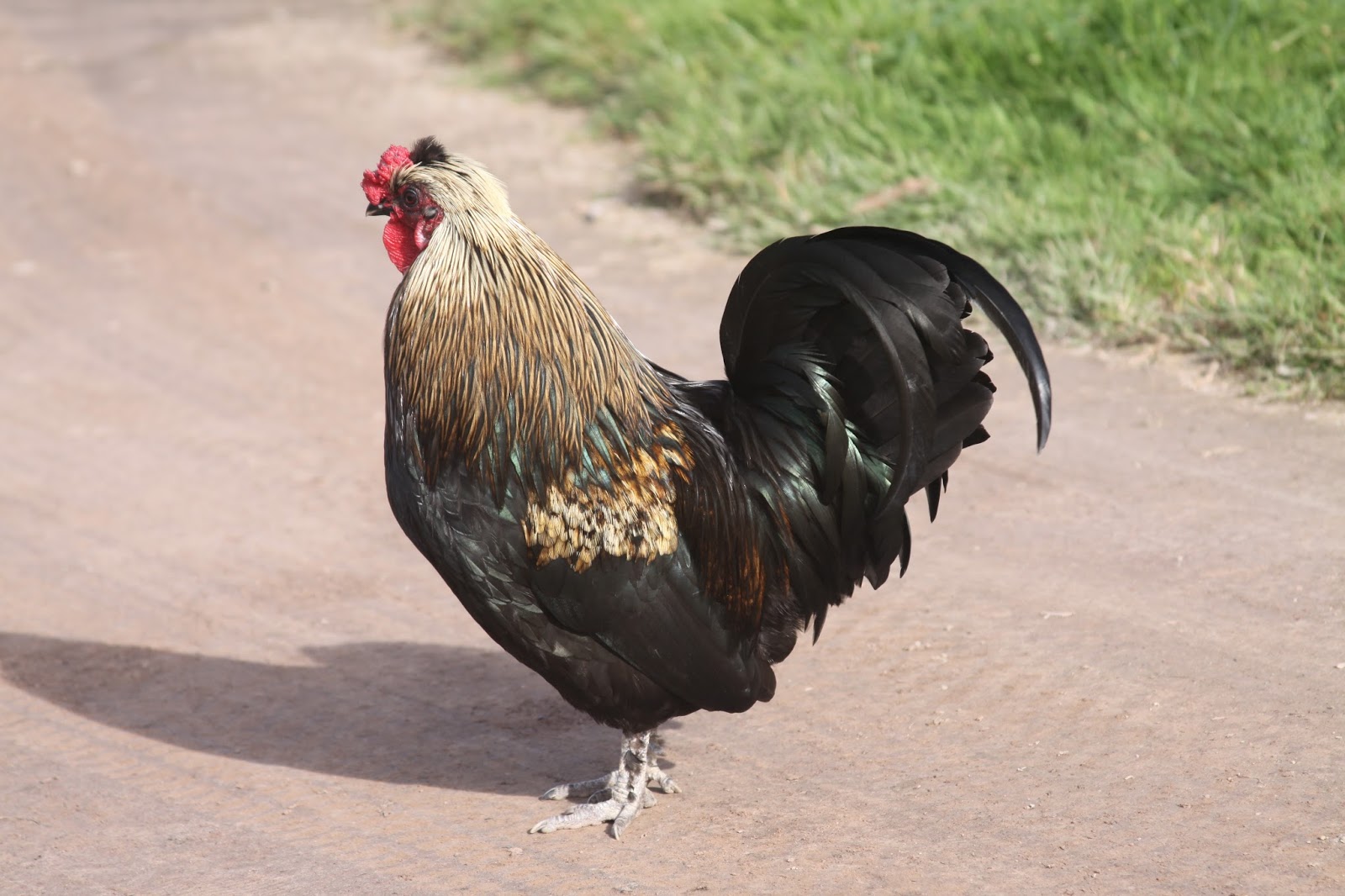
A French rooster!
A cool old-fashioned windmill.
This dolmen was likely covered by earth and served as a burial site until it was excavated. La Bretagne is filled with massive stone monuments and remnants of its ancient Celtic roots.
The marshes as seen from near the thatched village.